
Guided case walkthroughs from our publishing practice

Each portfolio entry follows our applied lesson format: a starting question, the guidance we provided, the action taken and the measurable result. These cases demonstrate how structured software publishing resolves real platform challenges across our service domains.

Media streaming platform distribution dashboard review session
Lesson 01 Media Streaming Track B

Streaming distribution resilience for a UK media network

Starting question

How does a regional media network maintain playback quality during traffic spikes without over-provisioning infrastructure year-round?

Method

We conducted a distribution audit, mapped peak demand patterns across three regions and designed a multi-tier CDN routing module with adaptive bitrate policies and automated failover logic.

Delivery

Published distribution specification, encoding profile library, monitoring dashboard requirements and phased rollout plan across London, Manchester and Edinburgh edge nodes.

Outcome

99.7% playback availability during peak live events. Infrastructure costs reduced by 22% through demand-aware scaling. Operations team equipped with documented failover procedures.

Telecommunications API integration planning workshop
Lesson 02 Telecommunications Track D

Satellite API bridge for enterprise telecommunications clients

Starting question

How can enterprise software applications access satellite communication services without bespoke integration for each client deployment?

Method

We mapped protocol requirements across three satellite service providers and designed a unified API bridge with standardised authentication, message formatting and status reporting.

Delivery

Integration specification, protocol mapping documents, developer portal documentation, sandbox test environment and SLA monitoring configuration.

Outcome

Integration time reduced by 40% for new enterprise clients. Single API surface replacing three provider-specific implementations. Developer onboarding documentation enabling self-service integration.

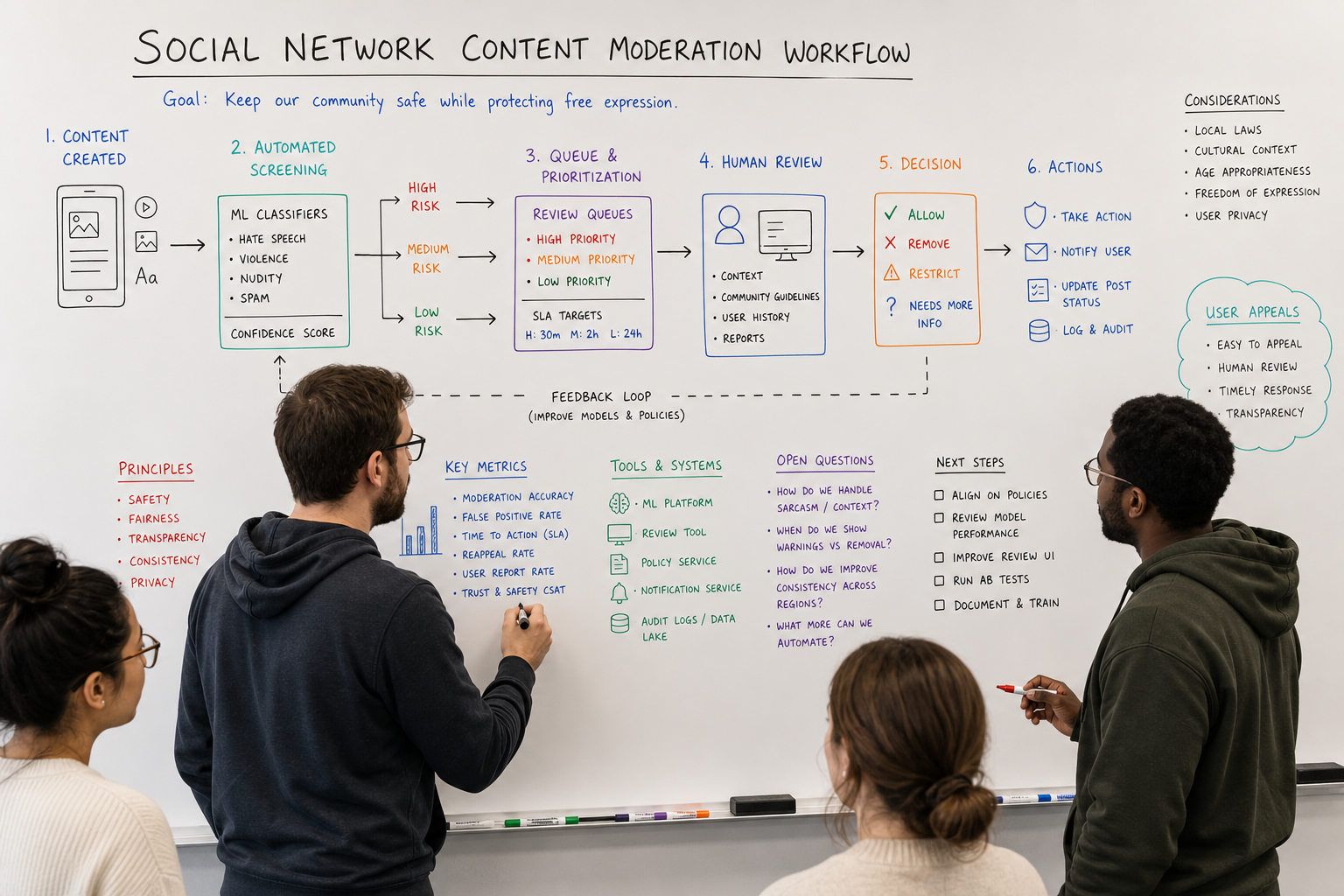
Social network content moderation workflow design session
Lesson 03 Social Networks Track E

Content moderation policy engine for a growing platform

Starting question

How does a social content platform enforce moderation policies consistently as user volume scales beyond manual review capacity?

Method

We analysed existing policy documents, classified content types by risk level and designed a rule-based moderation engine with automated enforcement and human review escalation paths.

Delivery

Moderation engine specification, policy rule definitions in machine-readable format, review queue workflow, appeal process documentation and compliance reporting framework.

Outcome

Automated handling of 78% of standard moderation cases. Human review focused on edge cases and appeals. Policy compliance metrics visible to legal and operations leadership.

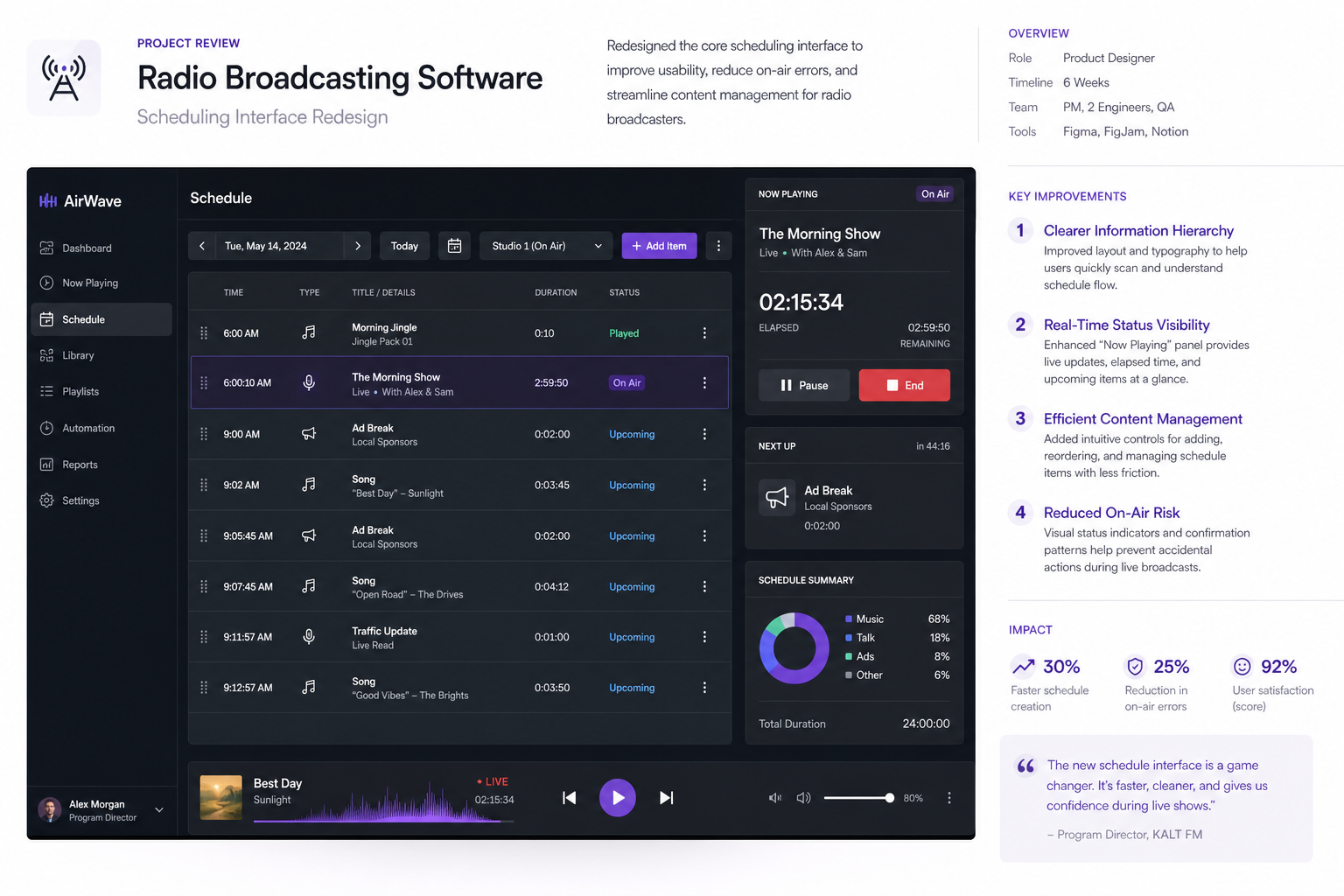
Radio broadcasting software scheduling platform review
Lesson 04 Broadcasting Track B

Multi-station radio scheduling platform

Starting question

How can a radio group manage programming schedules across twelve stations without conflicting automation rules and manual overrides?

Method

We mapped existing scheduling workflows, identified conflict points in automation handoffs and designed a centralised scheduling platform with regional override capabilities and audit logging.

Delivery

Scheduling platform specification, automation rule engine design, regional override workflow, integration guides for playout systems and operator training materials.

Outcome

Scheduling conflicts reduced to near zero. Regional managers empowered with controlled override authority. Complete audit trail for regulatory compliance requirements.

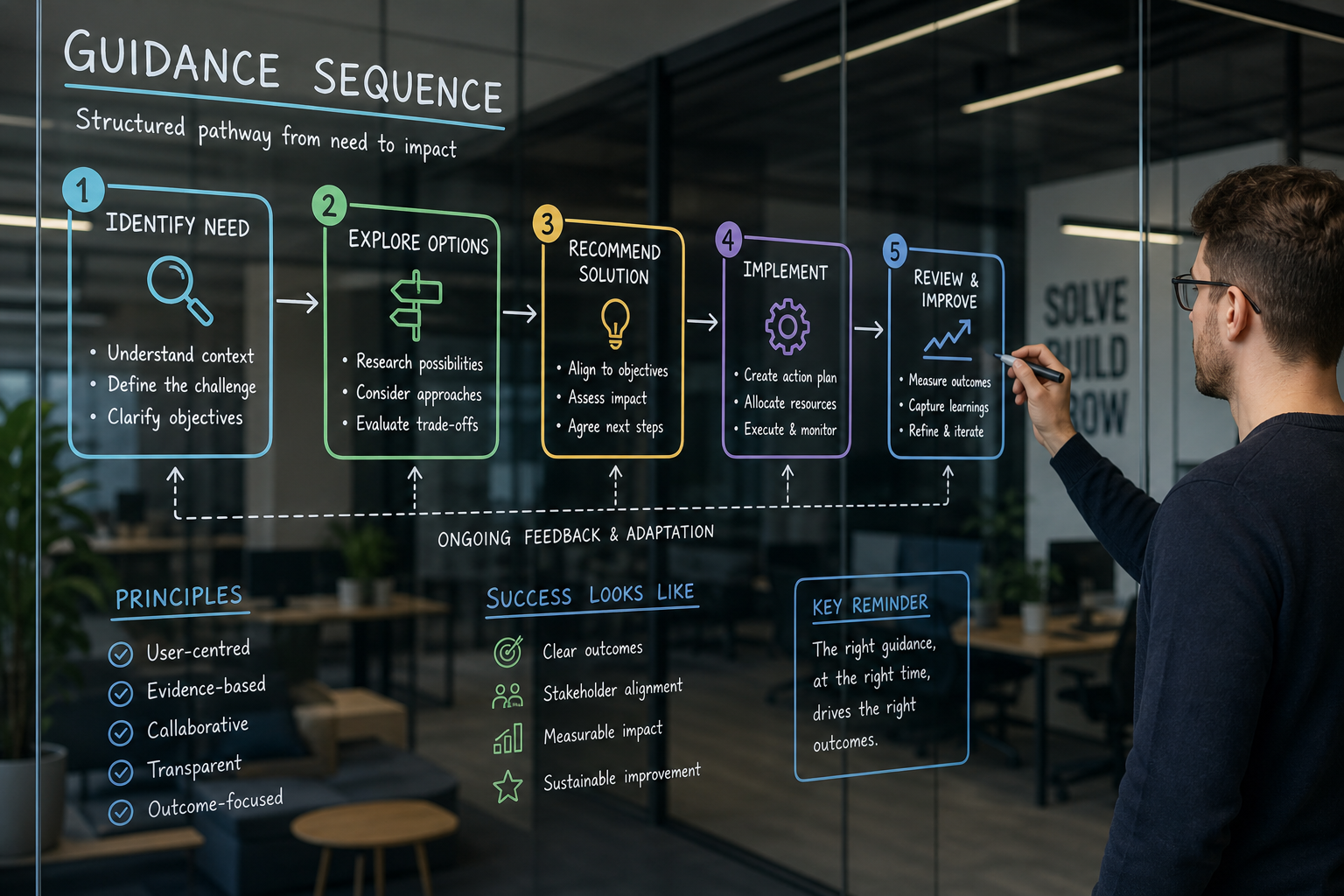
Structured software publishing pathway diagram on glass board
Lesson 05 Data Processing Track C

Publisher analytics pipeline for a digital periodical group

Starting question

How does a digital publishing group consolidate reader analytics across six periodical brands without duplicating data engineering effort?

Method

We designed a shared analytics pipeline with brand-specific transformation layers, unified schema registry and self-service query interfaces for editorial and commercial teams.

Delivery

Pipeline specification, schema registry documentation, ETL transformation guides, API reference for analytics queries and data governance framework with lineage tracking.

Outcome

Single analytics platform serving all six brands. Editorial teams accessing self-service dashboards within two weeks of handover. Data engineering effort reduced by 60% for new brand onboarding.

Discuss a similar challenge